Polished concrete cost per m² in Melbourne (2026 pricing guide)
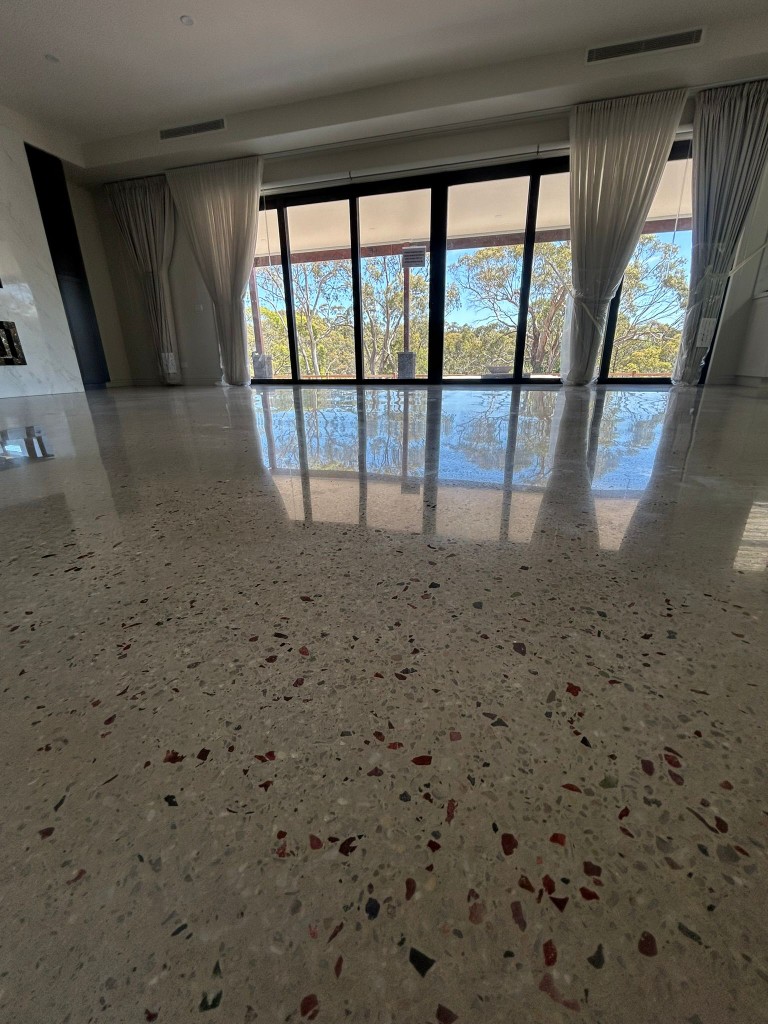
Polished concrete in Melbourne typically costs $99–$198 per m² inc GST ($90–$180 + GST) for a full diamond-polished floor. Grind-and-seal runs $71.50–$121 per m² inc GST ($65–$110 + GST). The gap is real and it matters, so here is what you are paying for and how to read a quote.
If you are specifying polished concrete for a new build, renovation, or commercial fit-out, see our polished concrete service page for our process and finishes. If you want a quote, get one here, and we are usually on site within a week.
The short answer: price ranges in 2026
These are Melbourne market prices for professional work, not DIY. All prices are per m² for supply and install, GST-inclusive, with the ex-GST price beside each one.
| Finish, per m² | Inc GST | + GST |
|---|---|---|
| Grind-and-seal (GnS) | $71.50–$121 | $65–$110 |
| True polished concrete, cream finish | $99–$143 | $90–$130 |
| True polished concrete, salt-and-pepper | $121–$170.50 | $110–$155 |
| True polished concrete, full aggregate exposure | $143–$198 | $130–$180 |
| Specialty or heritage re-polishDamaged slab, significant prep, coloured concrete | $176–$275+ | $160–$250+ |
Large commercial floors (500 m²+) often run 15–20% cheaper per m² due to setup efficiency. Small residential rooms (under 30 m²) can run 10–15% higher because mobilisation cost is spread over fewer metres.
What you are actually paying for
A quality polished concrete job is five to six stages of work:
- Site survey and slab assessment. Moisture testing, crack mapping, hardness assessment. Skipping this causes problems on install.
- Diamond grinding, heavy cut (30–50 grit). Removes the surface layer, reveals aggregate, levels lippage. This is the most machine-intensive stage. Cheap operators do one pass; quality operators do two or three.
- Progressive honing (70–400 grit). Each pass clarifies the surface. The more passes, the sharper the aggregate reads.
- Chemical densification. A silicate densifier penetrates the concrete and hardens it from within. This is what makes polished concrete durable. It is not optional on a premium floor.
- Fine polishing (800–3000 grit). Builds the gloss. The shine comes from the concrete itself, not a coating. This is the stage that separates true polished concrete from grind-and-seal.
- Penetrating impregnator sealer. Stain protection that bonds inside the concrete and does not peel or yellow.
Grind-and-seal skips stages 4 and 5. It grinds and then applies a topical sealer (polyurethane or epoxy) for the gloss. Cheaper and faster, but the gloss is a coating, not the concrete, and coatings eventually peel, scratch, and yellow.
What moves the price up
- Poor slab condition. Cracked, patched, or contaminated slabs (glue, paint, oil) need extra prep before grinding can start. Budget an extra $16.50–$44 per m² inc GST ($15–$40 + GST) if your slab has prior coatings or significant damage.
- Aggregate exposure level. Full aggregate exposure requires a deeper grind. More passes, more time, more blades.
- Tight spaces and corners. Hand grinding, edging, and detailed work around pillars and thresholds adds labour.
- Access and logistics. Multi-storey jobs, tight building-site access, and jobs requiring dust extraction in occupied spaces all add cost.
- Coloured or decorative concrete. Dyes, stencils, and sawcut patterns are a separate quote item on top of the base polishing.
What moves the price down
- Large, open floor plate. 300 m²+ open warehouses or showroom floors are the most cost-efficient to polish. Less edge work, faster mobilisation.
- New slab, well poured. A new residential slab with no prior coatings and no cracks is the best-case scenario for a polisher. Less prep, faster results.
- Cream finish (no aggregate). The surface cream is the easiest layer to polish, with no need for a deep grind.
Polished concrete vs grind-and-seal: the cost case
Grind-and-seal is 25–40% cheaper upfront. It is a legitimate option for garages, rentals, and budget-sensitive projects where you want a concrete look without the premium cost.
True polished concrete costs more upfront but less over time. The shine is the concrete itself, so there is no coating to wear through. Grind-and-seal needs re-coating as the topcoat wears, at $33–$66 per m² inc GST ($30–$60 + GST) per re-coat. On a 100 m² floor, the lifetime cost of grind-and-seal often exceeds polished concrete.
For a home you intend to stay in, or a commercial space with heavy foot traffic, true polished concrete is the lower-cost option over time. For a rental or a warehouse where you will be re-coating anyway, grind-and-seal is rational.
How to read a polished concrete quote
A good quote will specify: the number of grinding passes, the grit progression (top end should be 1500–3000 for a mirror finish), whether densification is included, and what sealer system is used. If the quote says "grind and polish" without specifying these, ask. Vague quotes often reflect vague scopes.
Red flags: "one-coat polish," no mention of densification, and a firm price from someone who hasn't seen the slab, in person or in photos.
Our pricing
Our polished concrete starts from $99 per m² inc GST ($90 + GST). Most residential polished concrete jobs with Claraseal land at $110–$176 per m² inc GST ($100–$160 + GST), depending on slab condition and finish level. Commercial work depends on use case, required wear-rating, and scale. We price the full system honestly and tell you which variables will affect your job specifically.
Get a quote or call 0417 035 112. We are usually on site within the week.