Concrete · Melbourne · Since 2014
Grind & Seal Concrete Melbourne, done properly.
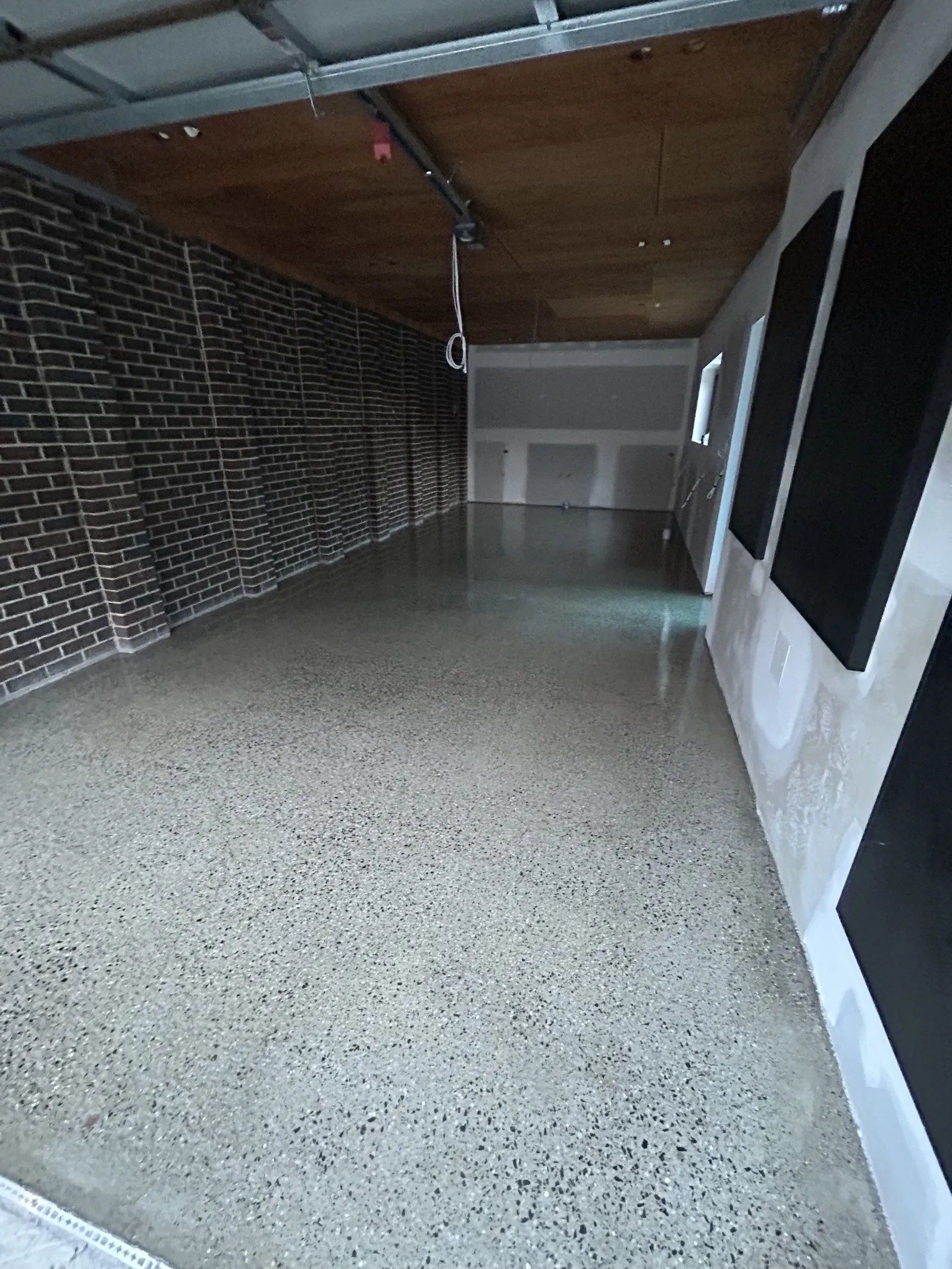
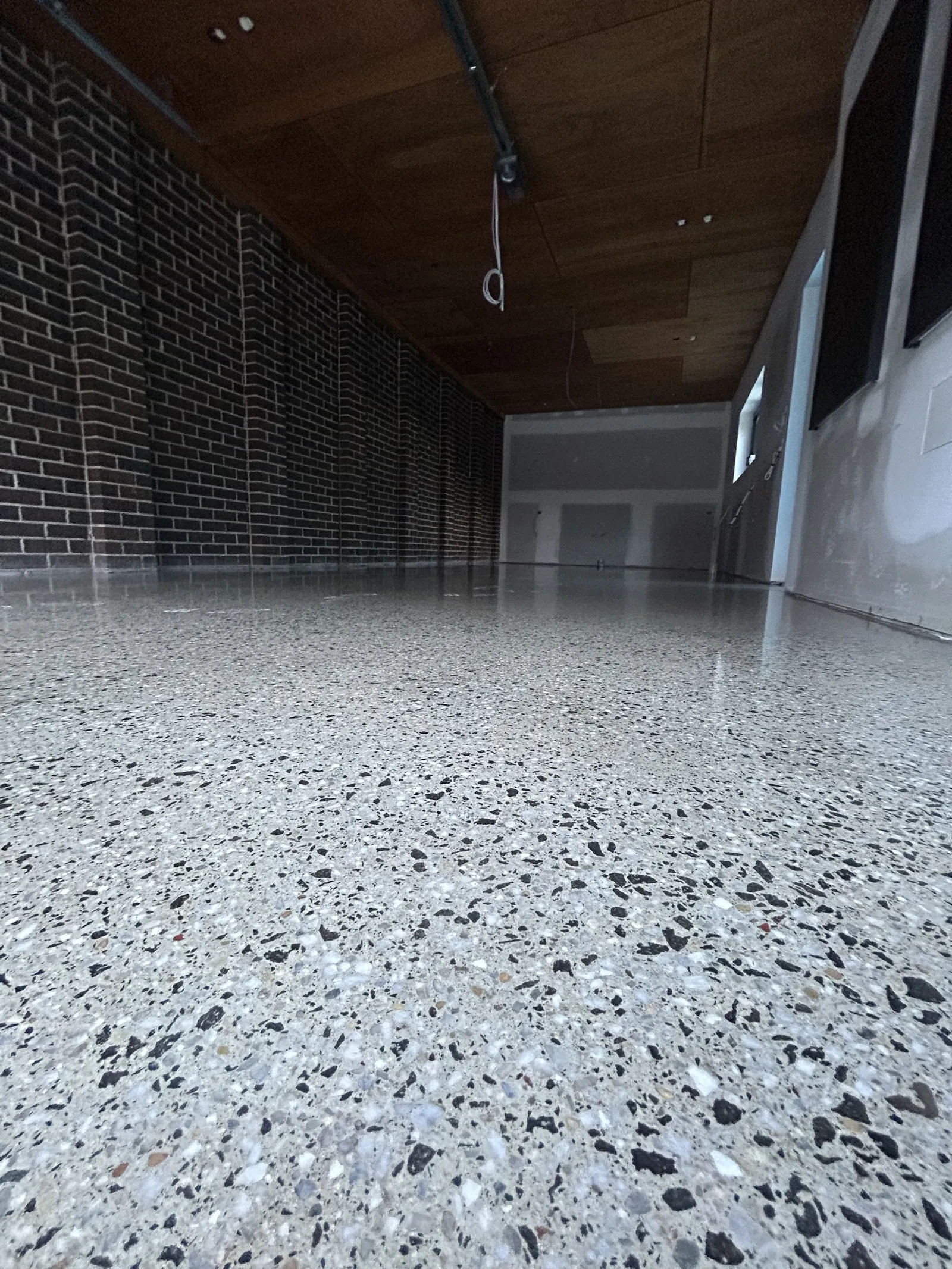
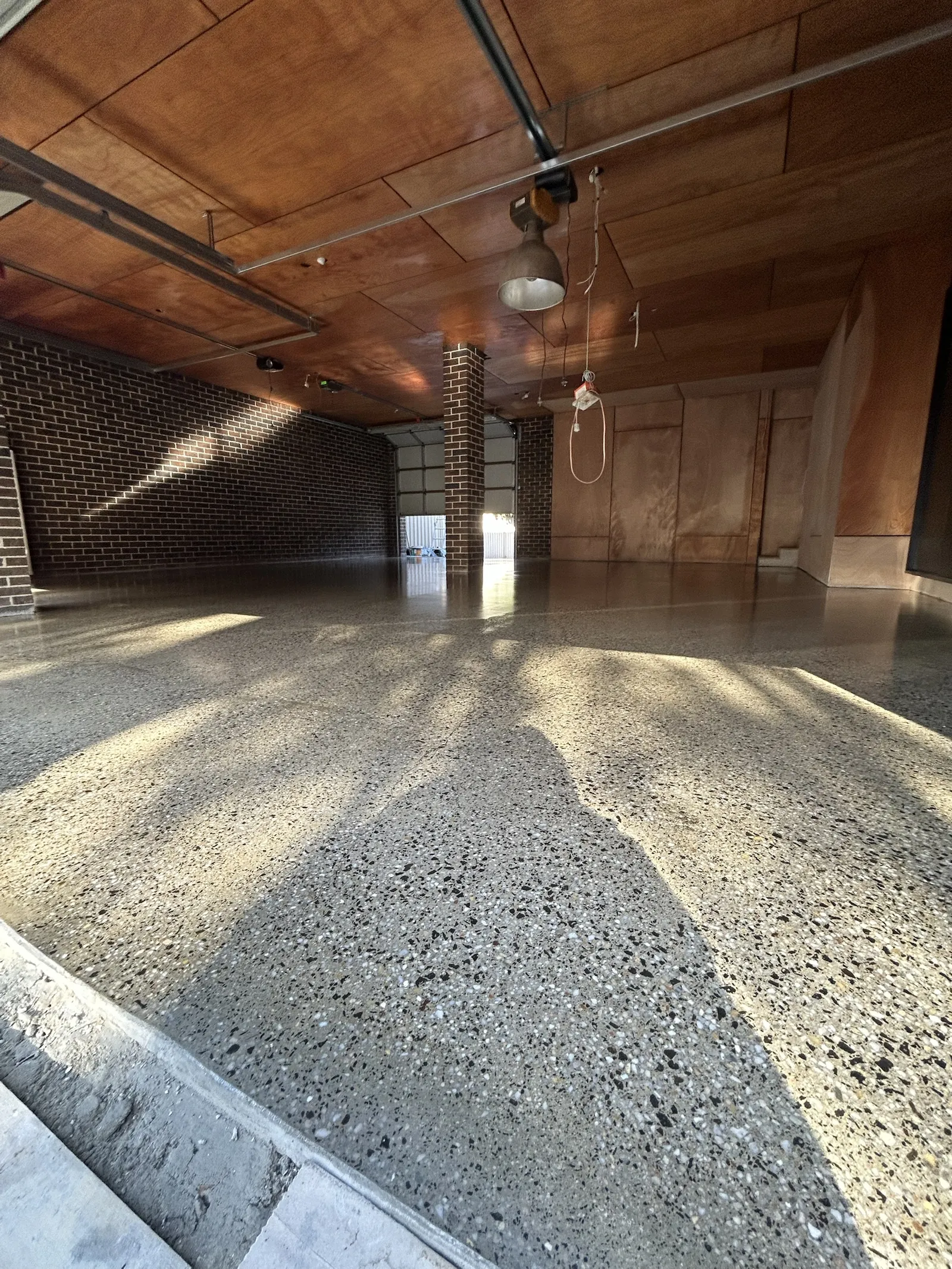
Ground flat, then sealed with a clear coat for the sheen. The budget-friendly concrete look.
From $71.50/m² inc GST $65 + GST Fixed price in writing before we start.
Quicker still: text us a photo for a ballpark.
15 yrs on the tools 500+ floors Fully insured Fixed price in writing
Trusted on projects for
- Westfield Doncaster
- Knox Shopping Centre
- Mecca
- Hallmarc Homes
- LVL Group
- Cambuild
The short answer
What it is, and what it costs.
Grind and seal concrete in Melbourne costs from $65 per m² + GST ($71.50 inc GST), up to around $110 per m² depending on the slab and the sealer. The concrete is ground flat with coarse diamond pads (50–200 grit) to clean up the surface and expose aggregate, then a topical sealer (acrylic, polyurethane or epoxy) is applied. The gloss comes from the sealer, not the concrete itself, so the finish needs re-coating over time. It is faster and cheaper than true polished concrete and more colour-flexible, making it the practical choice for garages, workshops, warehouses, and any concrete floor where budget and timeline matter.
Recent jobs
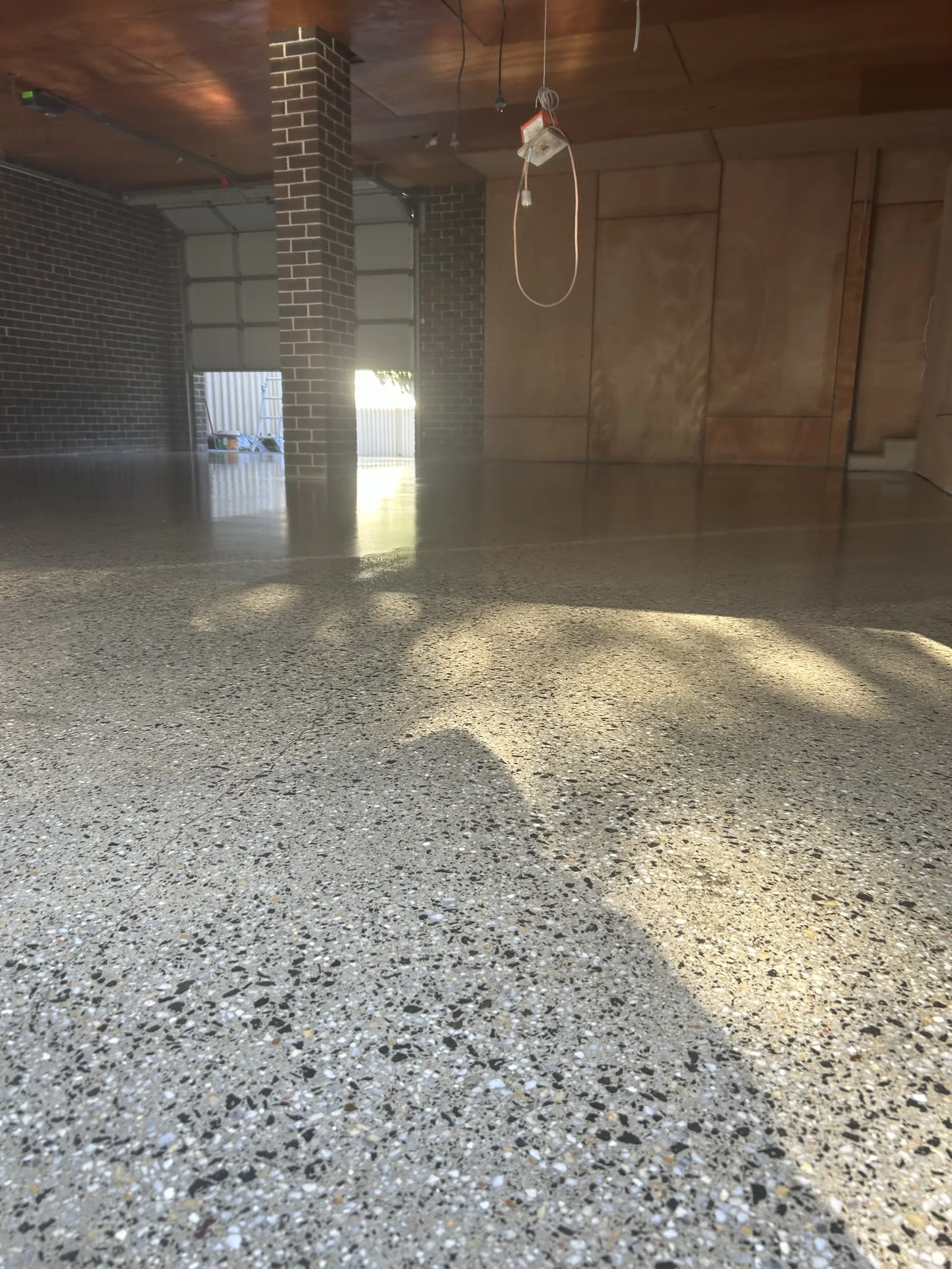
Grind & seal, on real floors.
Every photo on this site is a job we did in Melbourne, shot on handover.
Polished · terrazzo · epoxy · stone · commercial
The process
How we do it.
- 1
Surface prep
We assess the slab for cracks, contamination, and moisture. Existing coatings, adhesives, or paint are ground off. Cracks and voids are patched with epoxy filler.
- 2
Diamond grind
The slab is ground with 50–200 grit diamond tooling to open up the surface and expose aggregate. One or two coarse passes. Industrial dust extraction keeps the site clean.
- 3
Vacuum and clean
Diamond dust and slurry are vacuumed off completely. The surface is neutralised to remove any alkalinity before sealing.
- 4
Primer coat
A penetrating primer is applied to lock down the concrete and give the sealer a clean bond. This is what separates a long-lasting seal from one that peels in 12 months.
- 5
Sealer coats
Two or more coats of your chosen sealer (acrylic, polyurethane, or epoxy) are applied. Each coat is allowed to tack off before the next. Colour tints are mixed in at this stage.
- 6
Cure
Full cure in 24–48 hours for foot traffic, 7 days for vehicles or full load. We give you a firm cure schedule before we leave.
Concrete
Not sure it's the right finish?
Here's how the three concrete finishes compare, on real floors, with a starting price on each.
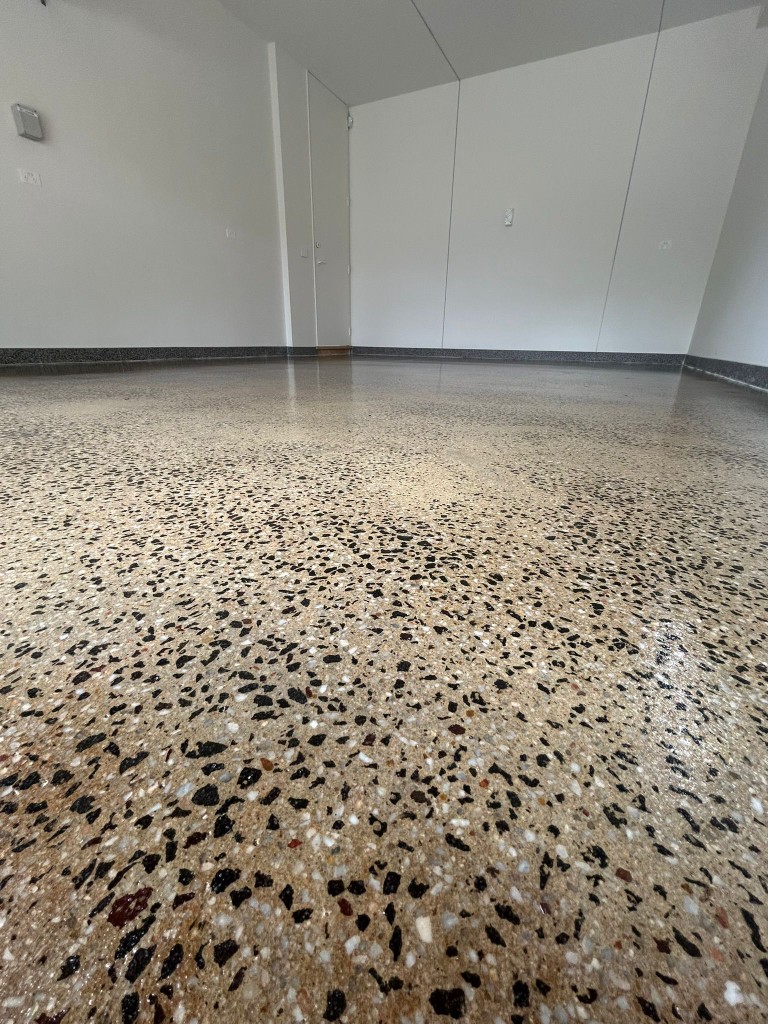
Grind & seal · Garage Grind & seal
Ground flat and clean, then sealed with a clear coat that gives it the sheen. The budget-friendly concrete look.
- Good for
- Garages, sheds, alfresco, rentals
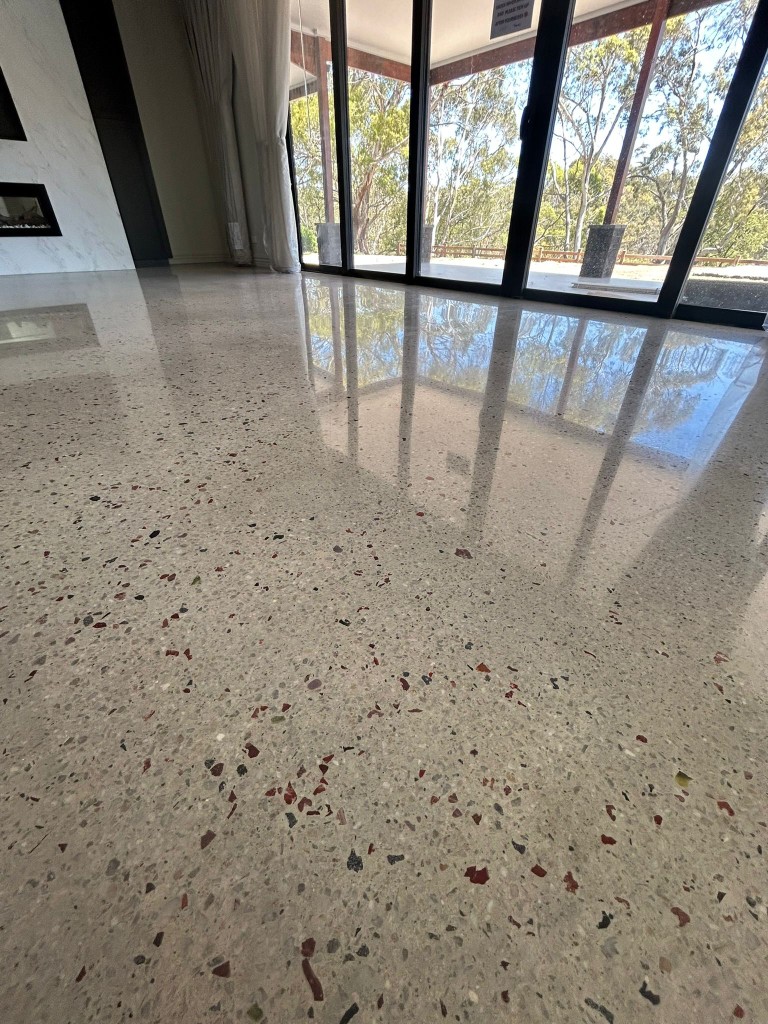 Polished concrete · Home
 Polished concrete
Diamond-ground in stages until the concrete itself shines. Nothing sits on top to peel or wear through.
- Good for
- Living areas, new builds, showrooms
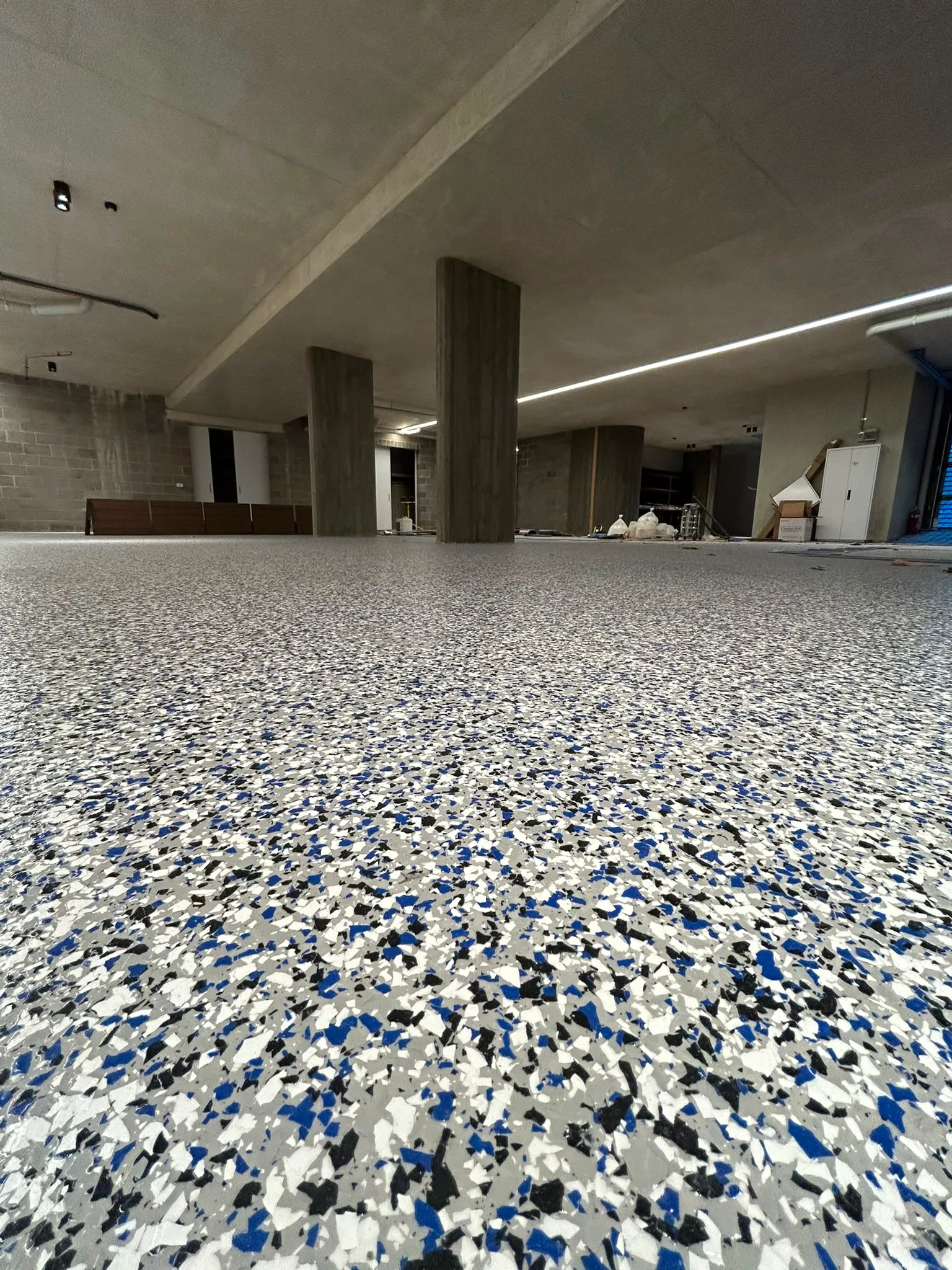 Epoxy flake · Commercial
 Epoxy
A flake or solid colour coating, laid over a diamond-ground slab so it bonds. Grippy and easy to wipe clean.
- Good for
- Garages, workshops, commercial
Swipe to compare →
Questions
Grind & seal: what people ask.
How is grind and seal different from polished concrete?
Grind-and-seal grinds the concrete to prepare the surface, then applies a topical sealer for the gloss. True polished concrete is ground through 7 or more grit stages (up to 3000 grit), densified with chemical hardeners, and mechanically burnished, so the shine comes from the concrete itself, with no coating. Polished concrete is more durable and has no coating to re-coat. Grind-and-seal is faster, cheaper and more colour-flexible, but the sealer will need re-coating over time.
How much does grind and seal cost per m²?
Grind-and-seal in Melbourne costs from $65 per m² + GST ($71.50 inc GST), up to around $110 per m², depending on slab condition, prep work required, sealer type (acrylic is most affordable, polyurethane most durable), and number of coats. We quote per project after inspecting the slab. Pricing over the phone is always approximate.
When does grind and seal need a re-coat?
The sealer is the part that wears, so how soon it needs a re-coat depends on traffic, sun and the sealer type. Polyurethane outlasts acrylic. Re-coating when the sealer starts to dull is straightforward and cheaper than a full re-grind. We can re-coat floors we did originally or any existing grind-and-seal floor in sound condition.
Can I drive on a grind-and-seal floor?
Yes. For a polyurethane or epoxy sealer, light vehicles are safe after 48–72 hours and full vehicle loads after 7 days. Acrylic sealers are lighter-duty and best suited to pedestrian traffic or light vehicles only. We specify the right sealer for your intended use before quoting.
Do you grind and seal existing concrete or only new slabs?
Both. Existing concrete is often better because it's already cured and settled, and old coatings, adhesives, or paint get ground off in the prep stage. We grind and seal new slabs, renovation projects, and old warehouse floors alike. The main variable is how much prep work the existing slab needs.
What sealer types do you use?
Acrylic, polyurethane, and epoxy. Acrylic is the most affordable and quickest to apply, suitable for low-to-medium traffic. Polyurethane is our most popular choice: tougher, more UV-stable, and longer-lasting. Epoxy offers the highest chemical resistance and is ideal for workshops, commercial kitchens, and industrial floors. We recommend based on your use case, budget, and preferred finish.
Get a price
Get your grind & seal price.
Three ways to start. Whichever suits you, you'll hear back within 24 hours.
- Call 0417 035 112Mon–Fri 7am–6pm · Sat 8am–4pm
- Text a photoQuickest way to a ballpark
- Email drawingscorey@claraseal.com
Builder, shopfitter or facility manager? Send drawings or a finishes schedule and get a number back within 24 hours.
Commercial floors