Concrete · Melbourne · Since 2014
Concrete Sealing Melbourne, done properly.
The wet look that does not go white.
Quote from photos Send a few photos and the rough size. Back within 24 hours.
Quicker still: text us a photo for a ballpark.
The short answer
What to know before you seal concrete.
Most concrete sealing complaints in Melbourne are the same one: it went cloudy. Someone wanted the wet look, got a solvent acrylic rolled onto a slab that was still holding moisture, and it turned milky white. The wet look is achievable. It just has to be done on a dry slab with the right product.
What goes wrong
The wet look going cloudy or milky.
Topical acrylics give that deep, wet look people want, and they are the most common thing to fail. Sealing a slab that still holds moisture traps it under the film, and the trapped water scatters light so the surface goes hazy white. It also happens when a second coat goes on too soon, or when the slab was sealed in cold damp weather. Once it has blushed it has to be stripped and redone, not coated over.
The process
How we handle concrete.
- 1
Check the slab is actually dry
Not dry on top, dry through. This is the single thing that decides whether a wet look survives, and it is why we will sometimes tell you to wait rather than seal in the wrong week.
- 2
Strip what has failed
Blushed or peeling acrylic has to come off completely. Sealing over it locks the haze in permanently.
- 3
Clean and treat the surface
Grime, oil and organic growth come out first. Any efflorescence gets dealt with rather than sealed under.
- 4
Seal for the look you chose
Penetrating for protection with no change in appearance, or a wet look applied in thin coats with proper cure time between them. We will show you both on your own slab before committing.
Questions
Concrete: what people ask.
My sealed driveway has gone white and cloudy. Can it be fixed?
Yes, but not by putting more sealer on it. The old film has to be stripped back, the slab dried out properly and then resealed. The good news is the concrete underneath is almost never damaged, it is the coating that failed.
Does exposed aggregate have to be sealed?
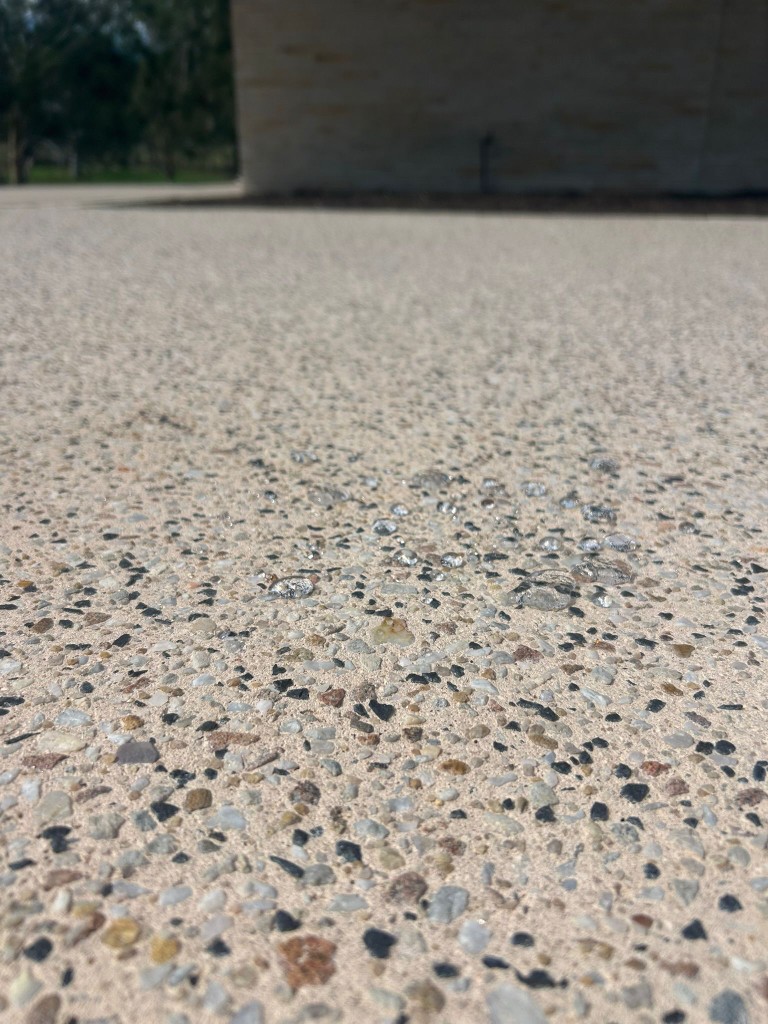
It does not have to be, but unsealed exposed aggregate holds dirt in the texture, picks up oil, and grows moss in shaded spots. Sealing makes it far easier to keep clean. Whether you want it wet look or left natural is a separate choice.
What is the difference between concrete sealing and polished concrete?
Completely different jobs. Sealing protects the surface you already have. Polishing grinds the slab back with diamonds to expose aggregate and build a mechanical shine. If you want a decorative floor inside, that is polishing. If you want to protect a driveway, that is sealing.
Can you seal a driveway in winter?
Sometimes, but Melbourne winters make it much harder to get a slab genuinely dry, and damp is what causes the milky finish. If we do not think conditions are right we will say so rather than take the job and hope it cures.
Will sealing stop oil stains from the car?
It gives you a real chance to wipe a drip up before it soaks in, which unsealed concrete does not. It is not a force field. Fresh oil on a sealed slab usually cleans off; oil left sitting can still mark.
Get a price
Get your concrete sealing price.
Three ways to start. Whichever suits you, you'll hear back within 24 hours.